


 Floral Best Sellers
 Fruity Best Sellers
 Sweet & Gourmand Best Sellers
 Luxury Designer Picks for Women
 Signature Youthful Scents
 Classic Floral Elegance
 Flirty Floral Favorites
 Elegant Daytime Scents
 Delicate Feminine Florals
 Feminine Powdery Signatures
 Powdery Floral Femininity
 Soft Feminine Florals
 Seductive Sweet Florals
 Iconic Floral Signatures
 Sophisticated Designer Florals
 Viral Sweet Favorites
 Elegant Salty-Vanilla Blends
 Youthful Celebrity Favorites


 Woody & Spicy Best Sellers
 Fresh & Citrus Picks
 Long-lasting Masculine Scents
 Signature Power Scents
 Sporty & Dynamic
 Modern Masculine Scents
 Amber-Fresh Masculine
 Spicy Tobacco Orientals
 Citrusy-Leathery Blends
 Fruity-Coconut Masculine
 Classic Fruity-Masculine


 Clean & Minimalist
 Floral-Woody Balance
 Citrus-Oriental Fusion
 Niche Unisex Favorites
 Top Unisex Daily Wear
 Romantic Unisex Picks
 Artistic Citrus-Woody Notes
 Japanese Minimalist Elegance
 High-Concentration Perfume Oils
 Artisan Blends
 High-End Gem-Inspired Scents
 Gemstone-Inspired Citrus
 Intense Oriental Blends
 Mediterranean Exotic Notes
 Oud & Oriental Blends
 Floral & Sweet Duos
 Citrus & Fresh Pairings
 Niche & Gourmand Crowns
 Intense Oriental Blends
 Warm Gourmand Florals
 Warm Amber-Floral Notes
 Rich Floral Rose Elixirs
 Deep Gourmand Tobacco
 Citrus-Woody Niche Blends
 Sophisticated Evening Wear
 Oud-Based Oils
 Bakhoor-Inspired Oils
 Spicy Oriental Scents
 Amber & Incense Oils
 Traditional Arabic Attar
 Modern Arabian Fusion
 Royal Oud-Oriental Blends
 Resinous Evening Scents
 Woody
Woody
 Floral
 Fresh Floral
 Chypre
 Fougère
 Resinous / Balsamic
 Fruity
 Gourmand
 Spicy
Spicy
 Green Plants
 Aquatic / Marine
 Musk
Musk
 Leather

 Diffuser & Aroma Use
 Roll-on Applications
 Seasonal New Arrivals (Summer/Winter)
 Hot Right Now – Trendy Perfume Oils
 Sensual Tropical Scents
 Summer Vibes
 Autumn Warmth
 Winter Richness
 Aromatic Perfume Oils
 Floral Perfume Oils
 Fresh Aquatic Perfume Oils
 Fruity Perfume Oils
 Herbal Green Perfume Oils
 American West Perfume Oils
Indoor Outdoor Living and Sensory Flow
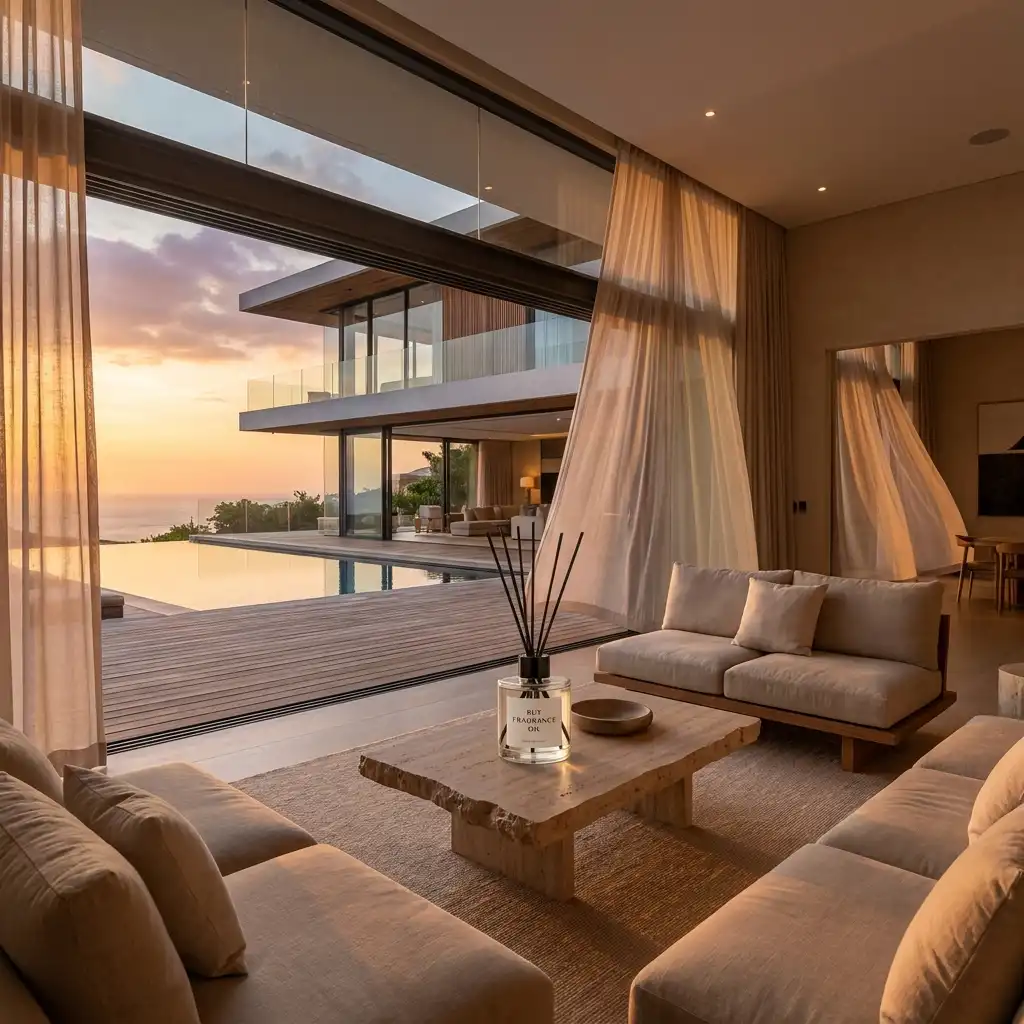
Indoor Outdoor Living and Sensory Flow
Indoor Outdoor Living and Sensory Flow in Luxury Homes, Indoor outdoor living has become one of the defining concepts in modern luxury residential design. Inspired by private resorts, wellness retreats, and hospitality-driven environments, contemporary homes increasingly prioritize seamless transitions between interior comfort and open-air serenity. These spaces are designed not only for visual openness, but also for emotional continuity, sensory calmness, and immersive everyday living.
The Rise of Indoor Outdoor Living in Luxury Homes
Luxury homes are increasingly moving away from rigid architectural separation and toward fluid spatial experiences. Large sliding glass walls, open-air lounges, covered terraces, interior courtyards, and resort-style outdoor living areas now define many contemporary residences. This approach reflects a broader shift toward hospitality-inspired living, where homes are designed to feel emotionally restorative rather than purely functional.
Many modern homeowners are drawn to environments that recreate the atmosphere of luxury retreats. Similar to resort-inspired living concepts, these homes prioritize openness, natural light, airflow, and emotional comfort as essential elements of residential experience.
The growing influence of luxury hospitality has also transformed expectations around residential atmosphere. Homes are no longer viewed solely as living spaces, but as immersive environments designed to support emotional well-being and sensory comfort throughout the day.
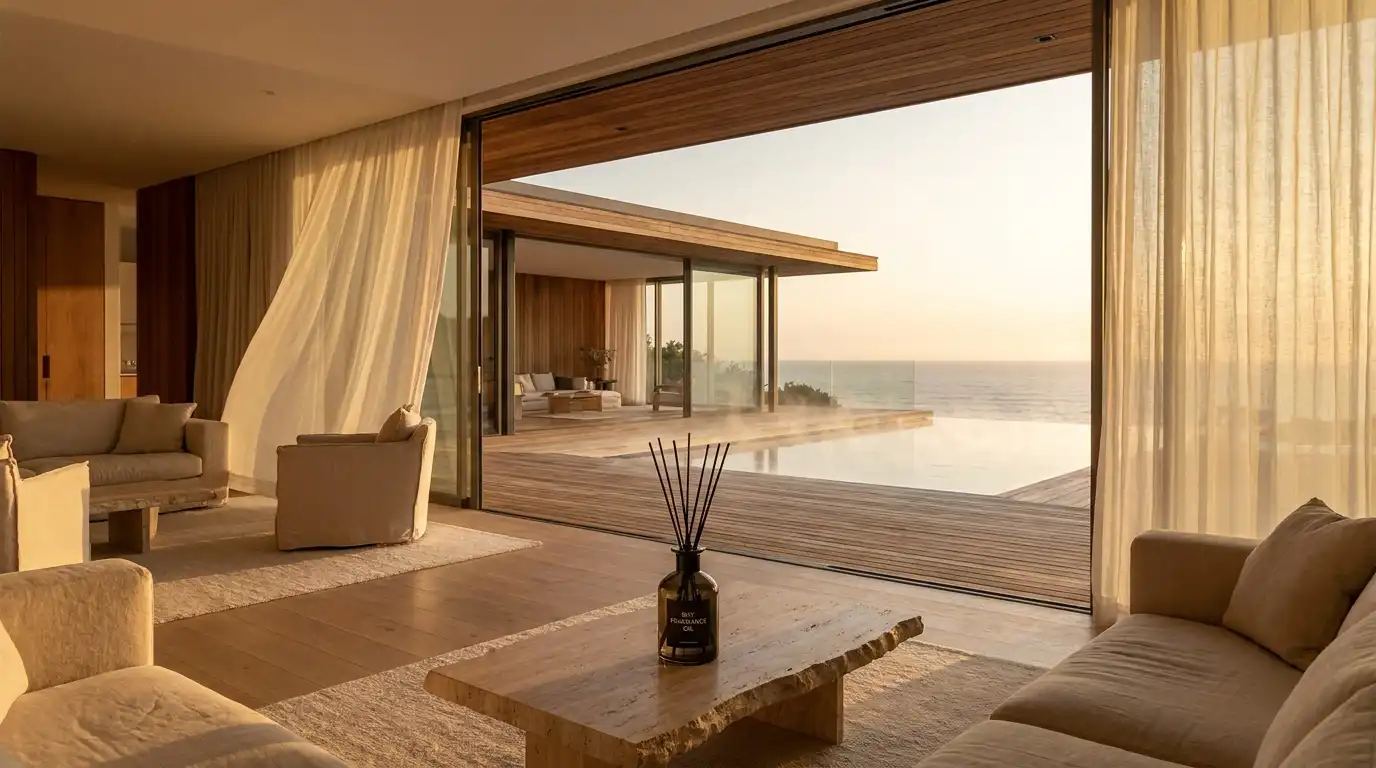
Dissolving architectural boundaries: Seamless indoor-outdoor design combined with ambient fragrance shapes the ultimate sensory flow.
Sensory Flow and Emotional Continuity
One of the most important aspects of indoor outdoor living is the concept of sensory flow. In luxury residential design, sensory flow refers to the seamless emotional and atmospheric transition between connected spaces. Rather than creating abrupt separations, architects and designers increasingly focus on continuity through texture, lighting, airflow, fragrance, and spatial openness.
This continuity creates a calming effect that supports emotional regulation and relaxation. Natural materials such as stone, linen, wood, and soft textiles contribute to environments that feel grounded and restorative. Open-air transitions allow residents to remain connected to natural rhythms, daylight movement, and outdoor serenity while maintaining interior comfort.
Many wellness-oriented environments now incorporate subtle ambient fragrance systems to reinforce sensory continuity throughout the home. Botanical notes, mineral-inspired accords, and soft woody compositions are often used to maintain a cohesive atmosphere between indoor lounges, outdoor terraces, and wellness spaces.
How Luxury Resorts Use Transitional Atmospheres
Luxury resorts have long understood the psychological impact of transitional environments. Arrival lounges, semi-open corridors, spa courtyards, infinity-edge terraces, and open-air relaxation areas are intentionally designed to create emotional decompression between spaces.
This hospitality-inspired approach is increasingly influencing contemporary residential architecture. Rather than isolating interior and exterior environments, modern homes now emphasize fluidity, openness, and immersive sensory integration.
The emotional effect of these environments is often subtle yet powerful. Soft air movement, natural acoustics, layered textures, filtered sunlight, and calming fragrance all work together to create an atmosphere that feels peaceful, restorative, and emotionally balanced.
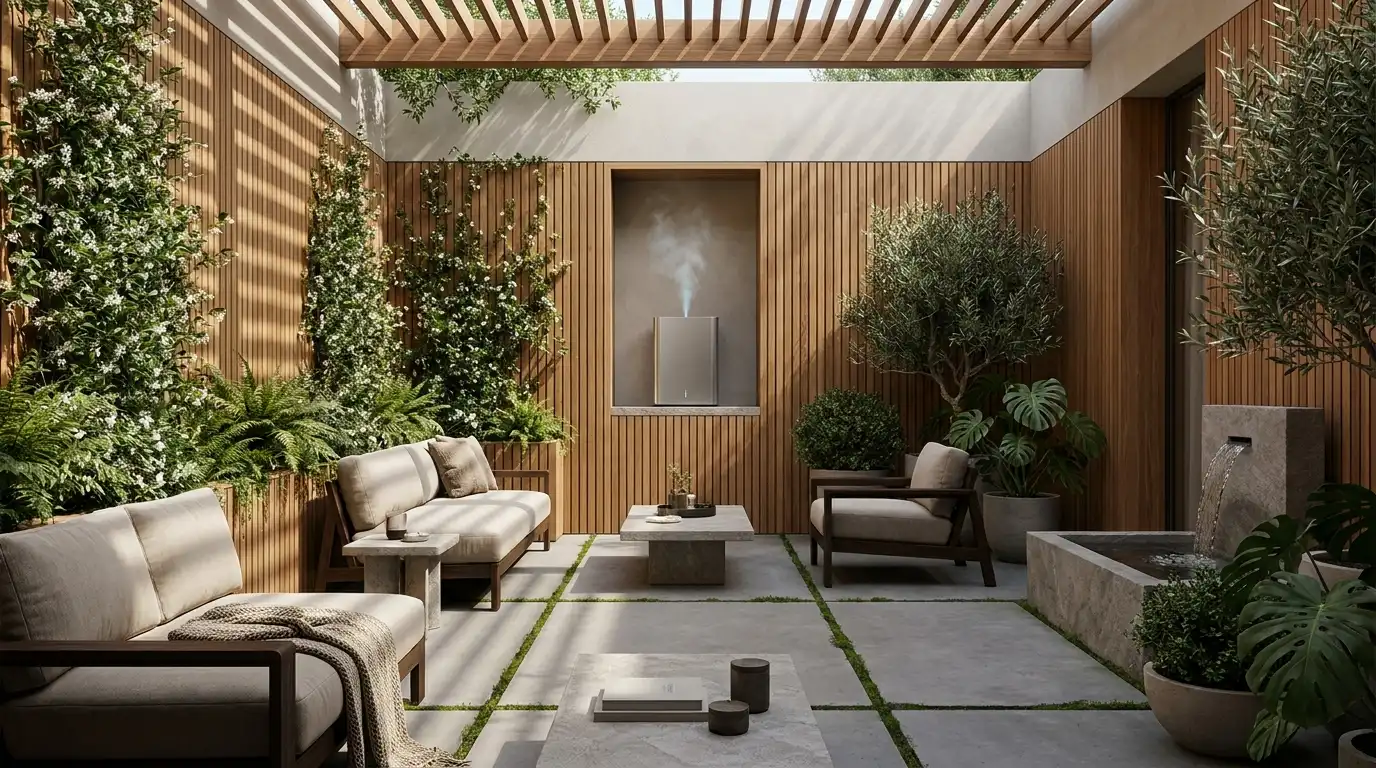
Designing for decompression: Transitional open-air spaces offer a peaceful escape from the overstimulation of urban life.
Fragrance and Open-Air Spatial Design
Fragrance plays a significant role in shaping indoor outdoor sensory environments. Unlike enclosed interiors, semi-open architectural spaces require more delicate fragrance layering that interacts naturally with airflow, humidity, sunlight, and surrounding landscape elements.
Luxury homes inspired by private resorts often incorporate fragrance subtly through wellness lounges, outdoor spa areas, shaded terraces, and entrance pathways. Fresh botanical notes, coastal mineral accords, green tea compositions, neroli, soft woods, and herbal blends are commonly associated with open-air hospitality environments.
Rather than overpowering the environment, these fragrance profiles are designed to feel atmospheric and integrated into the surrounding architecture. In this context, scent becomes part of the overall sensory architecture of the residence itself.
Creating Sanctuary-Style Residential Environments
The growing popularity of sanctuary-style homes reflects a broader cultural movement toward emotional comfort, privacy, and intentional living. Many contemporary homeowners seek environments that feel emotionally restorative and separated from the overstimulation of urban life.
Indoor outdoor living supports this philosophy by encouraging openness, calmness, and sensory connection with natural surroundings. Soft transitions between interior and exterior spaces create homes that feel expansive without becoming visually overwhelming.
Luxury residential design increasingly prioritizes emotional atmosphere alongside aesthetics. Wellness lounges, spa-inspired bathrooms, meditation terraces, shaded courtyards, and resort-style relaxation spaces are becoming defining features of modern sanctuary environments.
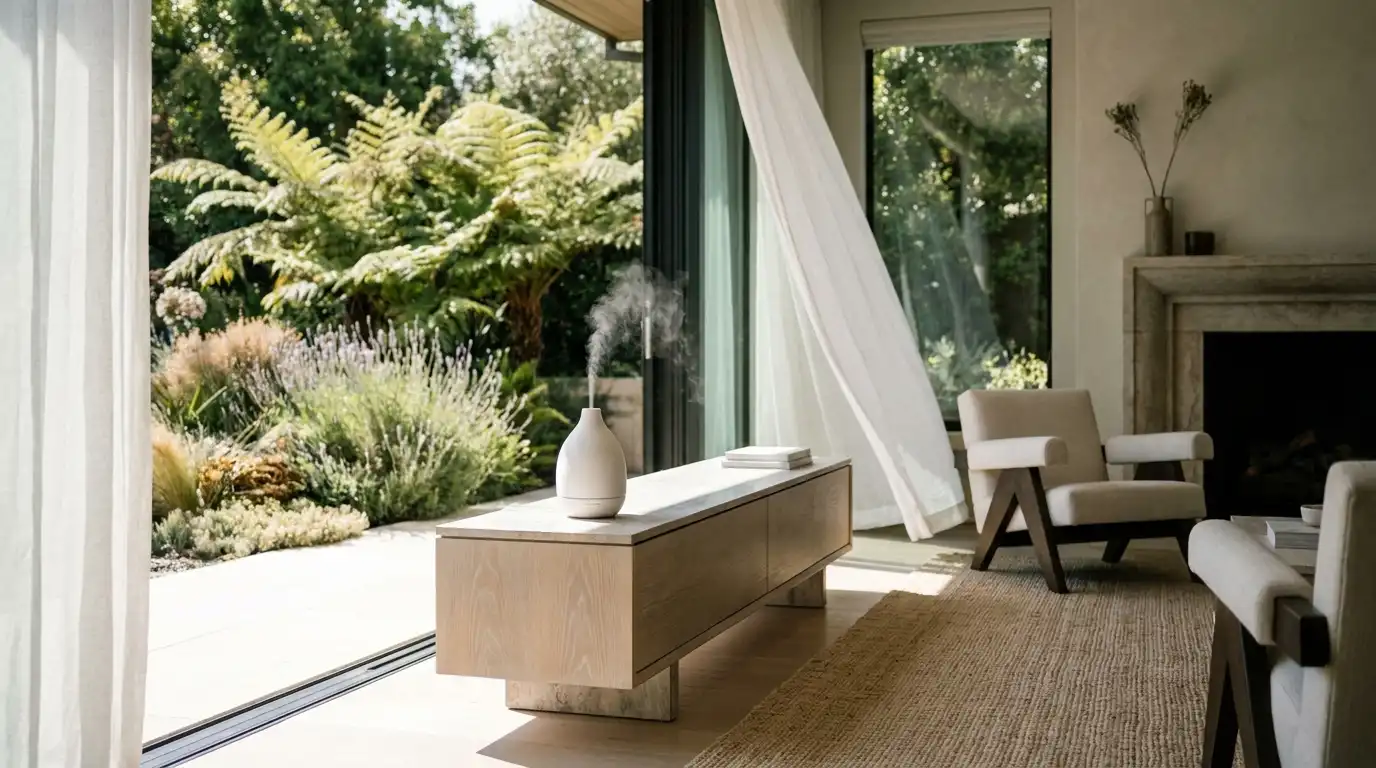
Architectural sensory flow: Delicate ambient scents are designed to blend naturally with open-air airflow and surrounding landscaping.
The Future of Resort-Inspired Sensory Living
As luxury living continues to evolve, the future of residential architecture is becoming increasingly sensory, atmospheric, and wellness-oriented. Hospitality-inspired design principles are influencing not only how homes look, but also how they feel emotionally throughout everyday life.
Future luxury homes will likely continue moving toward immersive sanctuary-style environments inspired by private resorts, wellness retreats, and hospitality psychology. In these spaces, emotional atmosphere becomes just as important as architectural aesthetics themselves.
For many contemporary homeowners, true luxury is no longer defined solely by scale or visual excess, but by the ability of a home to create calmness, emotional balance, and restorative sensory living experiences.
Many contemporary residences now embrace principles associated with resort-inspired living, where emotional atmosphere and sensory comfort become central elements of modern luxury environments.
Similar to many hospitality-inspired homes, modern luxury environments increasingly prioritize immersive atmosphere, emotional calmness, and sensory continuity throughout connected living spaces.
Many wellness-oriented residences now use subtle ambient fragrance systems to maintain emotional consistency between indoor lounges, spa environments, and open-air relaxation areas.
The growing importance of emotional wellness within residential architecture continues to influence how luxury environments are designed and experienced today.
Many luxury residences also incorporate signature scent systems to strengthen emotional identity and reinforce the atmosphere of private retreat living.
The growing influence of private sanctuary living concepts continues shaping emotionally restorative indoor outdoor villa environments.
Many luxury residences now prioritize luxury villa lifestyle and emotional living to support immersive residential openness and sensory continuity.
The growing influence of emotional atmosphere planning continues shaping hospitality-inspired indoor outdoor environments centered around sensory calmness.
Indoor Outdoor Living and Sensory Flow
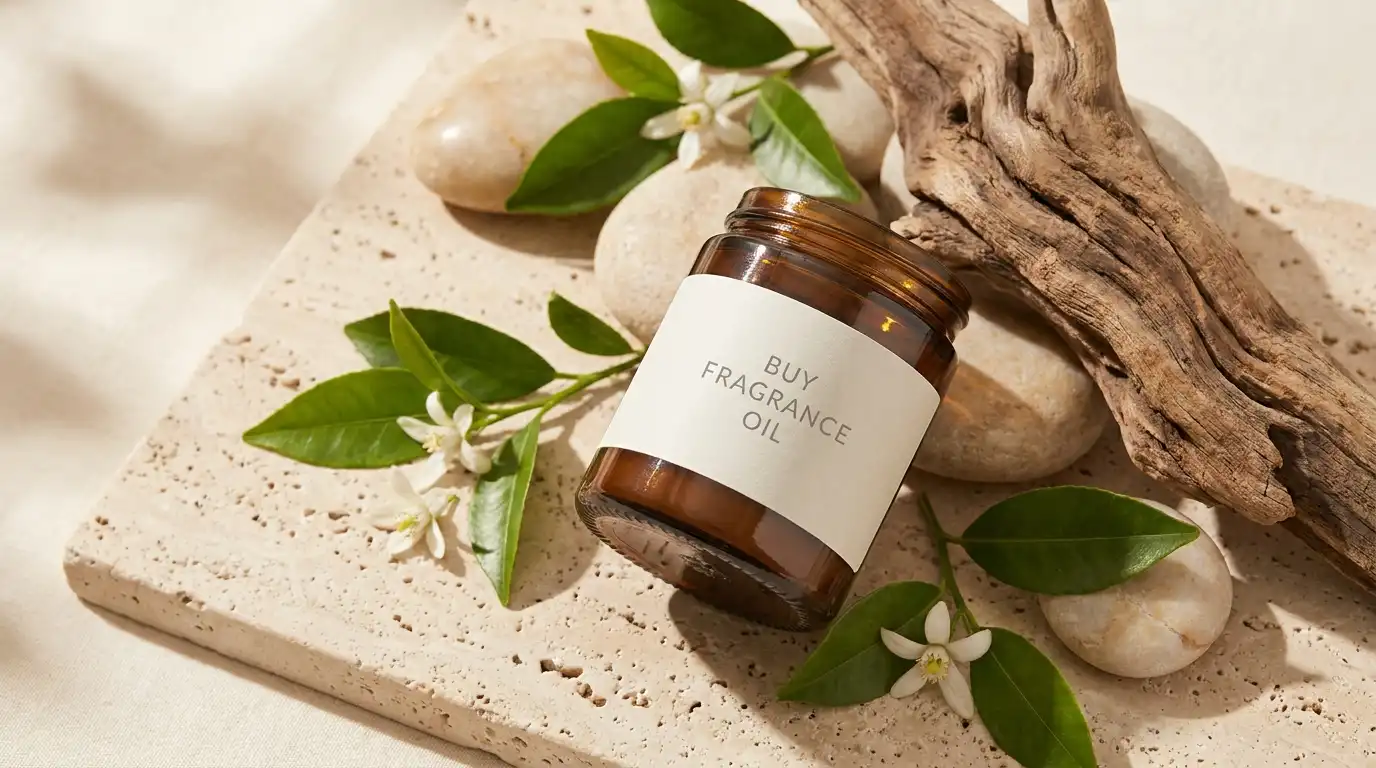
Formulating emotional consistency: Restorative coastal mineral accords and fresh botanical notes bridge the gap between interior comfort and exterior serenity.
 Floral Best Sellers
 Everyday Elegant Scents
 Resinous / Balsamic
 Oriental / Amber
 Fougère